
Cache County Warrant Searches
The state BCI page links Utah’s free Statewide Warrant Search. It covers felony, misdemeanor, infraction, and traffic failure-to-appear warrants entered by courts. Cache County has no separate official sheriff search form in the sources reviewed. The sheriff’s public route is a phone call, followed by confirmation with the court that issued the record.
Search your own name or help a family member. Keep a citation, case number, and date of birth available, but do not post them online. If the system returns a possible match, record the court name and contact that court before acting.
- Open the official BCI warrant page and follow its link to the statewide search.
- Use name and date-of-birth fields shown by the live public tool. Try a broader name mode if needed.
- Read the issuing court and case details. Use Xchange for eligible court case history, not as a warrant-only list.
- Call the named court. For a Cache County verification fallback, call the Sheriff’s Office through its official site.
- Ask the clerk about status and lawful resolution. A records request can seek agency documents, but it does not clear a warrant.
BCI Is Cache County’s State Route
The Utah Statewide Warrant Search is linked by the state’s BCI page. Its file can contain records from courts across Utah, so a Cache County result may come from First District Court or a local justice court. BCI says court entry and removal affect accuracy and timing.
There is no official Cache County public active-warrant roster to use as a second countywide list. The sheriff instead asks people to call (435) 755-1000 to verify a suspected warrant. Its warning also says staff will not ask for phone payment or gift cards.
The state search provides a useful lead, while the issuing court confirms its own docket.
Utah Courts’ Cache contact page lists the First District location and phone.
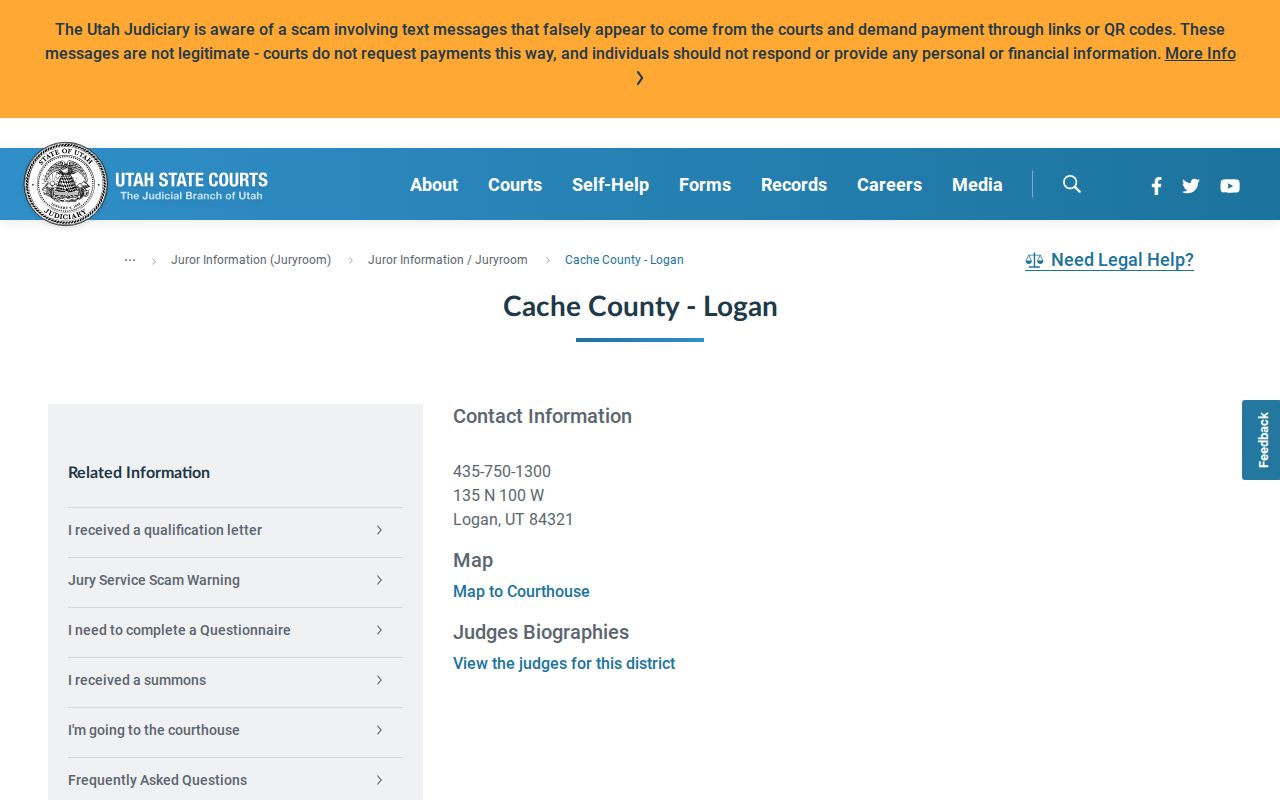
First District’s contact route is for district matters, not every local justice-court case.
What a Warrant Search Asks For
The BCI guide describes name modes and optional identifiers, but the public portal may show fewer fields than the law-enforcement screen. Use only fields actually offered in the public tool. A court or warrant number query needs the correct Court ID, which is an alpha-numeric court identifier.
| Field Label | Type | Required | Notes |
|---|---|---|---|
| Last name | Text | Name search | Starts-with is the guide’s default; exact, contains, and phonetic modes are documented. |
| First name | Text | Name search | The guide suggests the first three letters to broaden a query. |
| Date of birth | Date | Optional | Exact or range behavior is documented; use it to distinguish a possible match. |
| Court ID | Text or selection | With case/warrant number | A mismatch can return no results even when a record exists. |
| Case, warrant, or index number | Text | Optional alternative | The index number is a UCJIS reference, not the court case number. |
Cache County Court ID Matters
If a notice gives a court and case number, use those details rather than guessing at a court code. The BCI guide says a case or warrant query requires a matching Court ID. A wrong code can produce “NO RESULTS FOUND.” Cache’s research does not publish one local warrant-number pattern, so do not treat an invented sample as real.
Keep any displayed number private and give it to the issuing clerk. The clerk can tell you whether the case belongs to First District Court, Logan, Hyrum, Providence, Wellsville, or a court that received an older transferred matter.
Cache County Warrant Search Results
A result may connect a name and date of birth with a court, case, warrant, charge, or status. The exact public layout can change. BCI explains that one person may have more than one warrant and that a record can be updated over time. Read each court and case line separately.
| Warrant number | Court ID + assigned number; exact Cache format was not located. |
|---|---|
| Charge | Confirm the court’s current case details; public detail can be limited. |
| Issuing court | The next contact for status, appearance, payment, and recall. |
| Bond or release | Case-specific; no Cache County default amount was found. |
| Status | Active, served, recalled, or another system label; ask the court what it means now. |
Xchange and Cache County Warrants
Utah Courts Xchange is a case-information tool for eligible district and justice court records. It can show case summaries, hearings, filings, judgments, and other docket details. It is not a warrant-only search and does not show every record.
Online use may require an account or subscription. Utah Courts also identifies courthouse terminals as an access route. Sealed, expunged, juvenile, and other nonpublic records are excluded.
Utah Courts explains Xchange access.
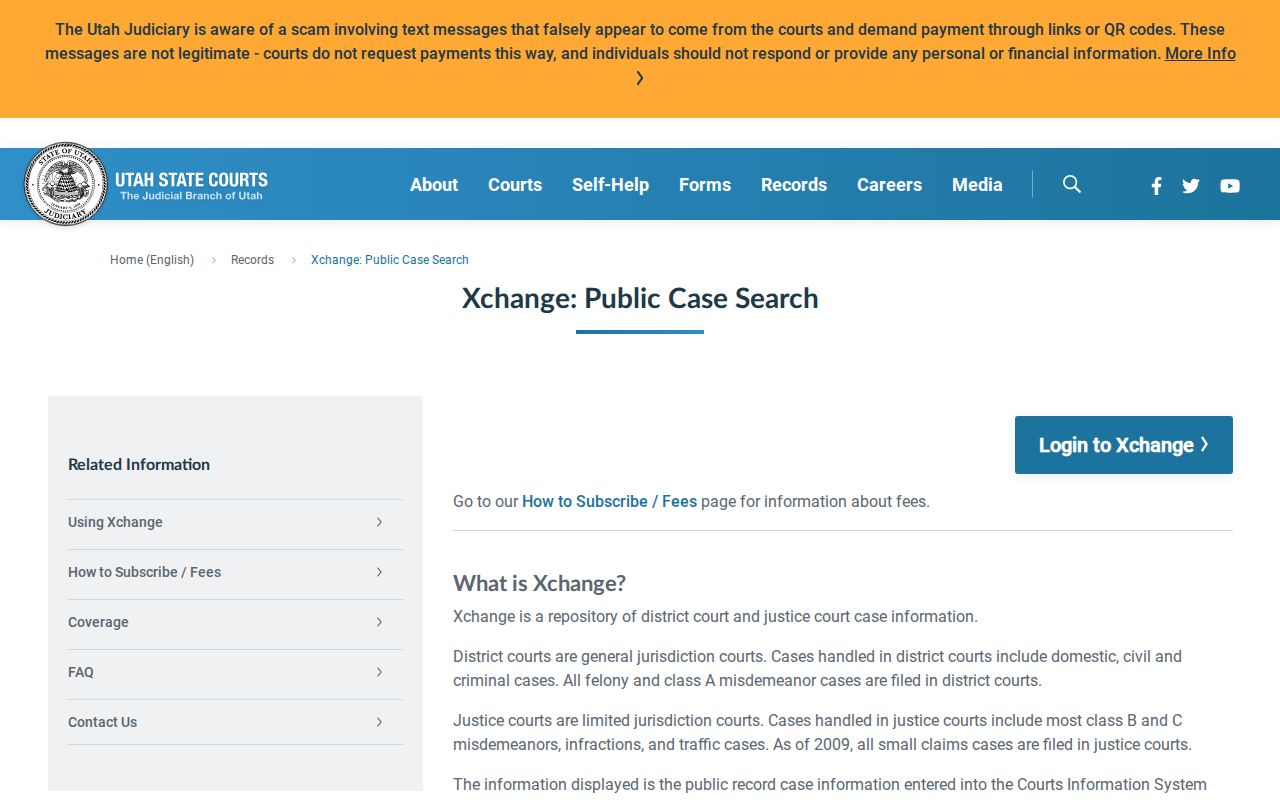
Use Xchange to understand an eligible case, then ask the issuing court about the warrant.
The account screen is separate from a warrant result.
Utah Courts public case access shows the separate account and login boundary.
Do not mistake an access or login screen for a status response.
Cache County Warrants: Who Holds What
First District Court handles its district cases. Local justice-court clerks keep their own limited-jurisdiction files. The Cache County Sheriff’s Office verifies a suspected local warrant by phone and serves court process. Cache County Records accepts requests for sheriff-held agency records, not a general court docket search.
For older Smithfield, North Logan/Hyde Park, or Richmond matters, verify the current court because the local court route changed. Use the Utah Courts directory to find the right clerk. The sheriff cannot recall a warrant created by a judge.
Cache County Courts Unit information describes the courthouse and local court structure.
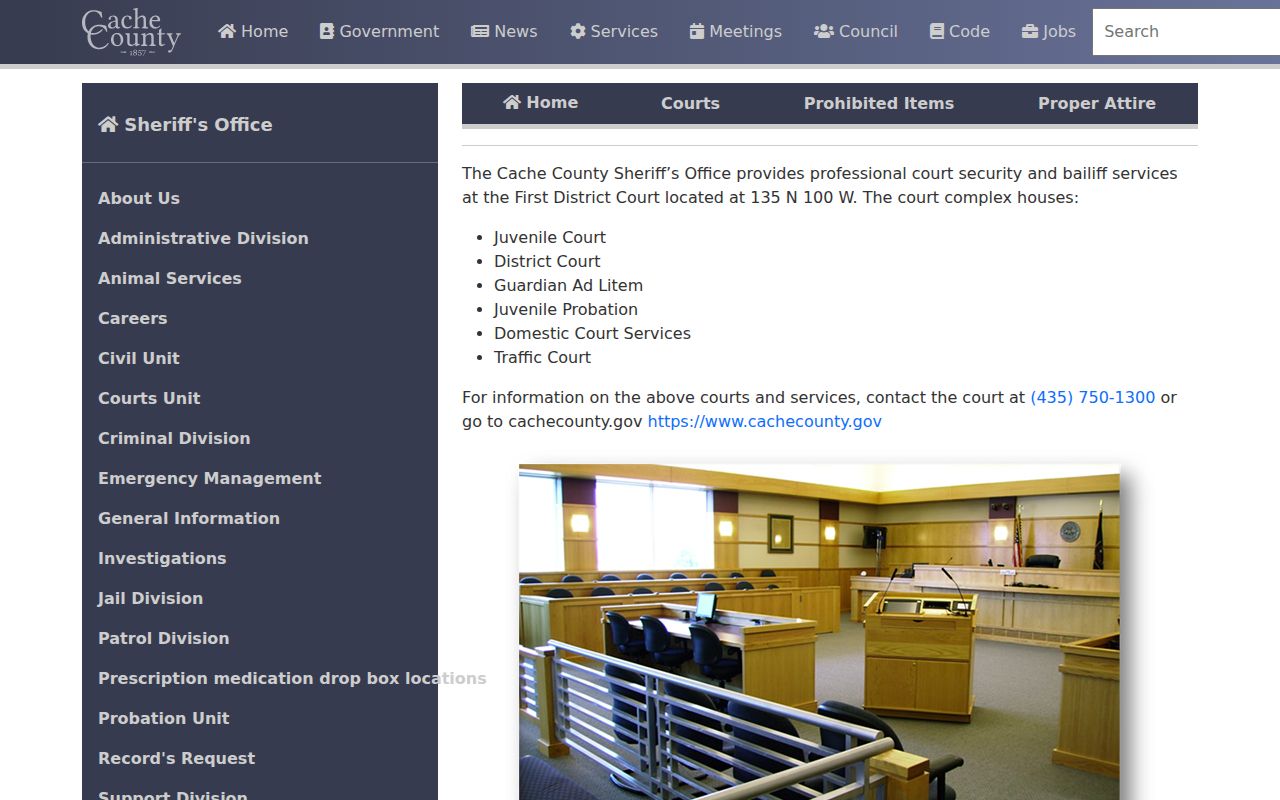
Confirm the court first if a city link or old citation points to a closed court.
A Blank Cache Search Is Not Clearance
A no-result screen may reflect a wrong spelling, wrong Court ID, a record that has not reached the file, a restriction, or a court transfer. BCI says a recalled warrant can take time to disappear, and a served warrant may remain in the statewide file for about 15 days unless the court recalls it. No search result is not proof that no warrant exists.
Ask the issuing clerk to check the docket and explain the next step. If you need a sheriff record, use the published GRAMA process. Cache Records says requests may take up to ten working days, and active reports can be withheld until cleared.
Cache County Records Requests Do Not Certify Warrant Status
The Sheriff’s Records office accepts GRAMA requests for eligible agency records at recordsrequest@cachesheriff.gov. Its process can take up to ten working days, and active reports may remain unavailable until cleared. Copy fees relate to records production, not a warrant verification or court-status certificate. For the current order, use the court named in the case.
Which Warrants Stay Restricted
Utah court rules balance public access with privacy, safety, and other protected interests. Juvenile, sealed, expunged, and restricted records may not appear in ordinary Xchange or statewide search results. GRAMA classifications can also limit what the Sheriff’s Records Department releases.
Ask the court or agency that holds the record what access rule applies. A records request does not force release of an active investigation or a sealed court file.
Key Rules:
Utah CJA Rule 4-202 allows court records to be restricted for stated privacy and safety purposes.
Utah Code §78A-6-209 limits inspection of juvenile court records.
Utah Courts’ nonpublic-record guidance explains sealed-record access and related limits.