
Cache County Rule 4B Citations
Utah Rule of Criminal Procedure 4B covers a citation case when a person does not appear as required. The court may issue a bench warrant. The citation tells the reader which court started the case, while the statewide search can help locate a listed warrant. A bench warrant is a court order, not a separate sheriff database.
Cache County’s current local routes include Logan, Hyrum, Providence, and Wellsville justice courts, plus First District Court for district matters. Check the name printed on the citation before choosing a portal.
Utah Rule 4B describes the citation and failure-to-appear process.
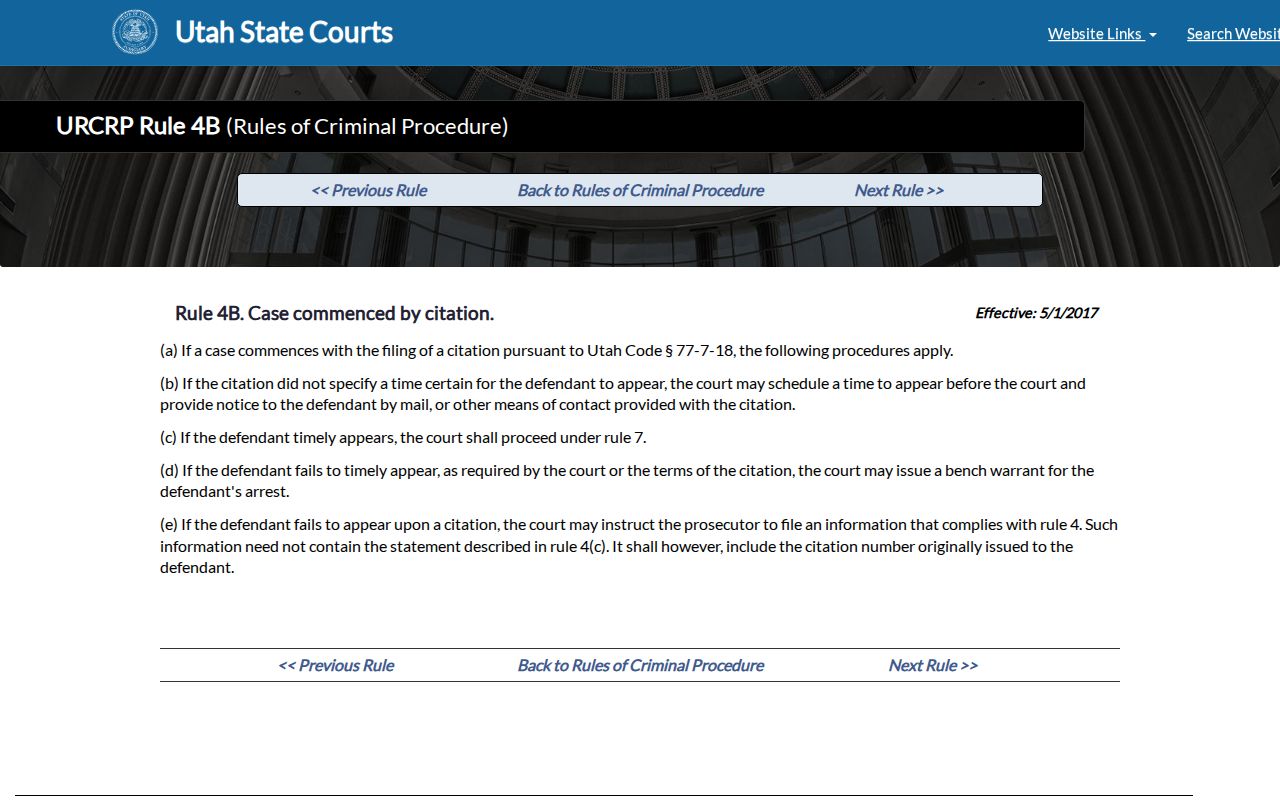
The rule gives the court authority; the issuing clerk can explain what applies to one case.
How Bench Warrants Work in Cache County
A bench warrant is issued from a court case when someone misses a required appearance or does not follow an order. In Cache County, the issuing court depends on the case. A citation may sit in a city justice court; a felony or class A misdemeanor generally belongs in First District Court.
The label describes the court’s action. It does not tell the reader whether payment alone will end the matter. Ask the clerk whether the warrant remains active, whether a new court date is needed, and what proof to keep.
Cache County FTA Notice Timing
Utah CJA Rule 4-701 describes a fine and appearance notice path for cases where a court appearance is not required. Under the rule, a notice may follow after 14 days, with a $50 increase, and a further $75 increase may follow at 40 days along with a failure-to-appear warrant. The court must confirm whether the rule and schedule apply to a specific citation.
These time points are not a Cache County bond schedule and do not replace the citation’s instructions. If a date passed, call the court that issued the citation and ask what status and remedy apply.
Utah CJA Rule 4-701 is the source for this fine and FTA sequence.
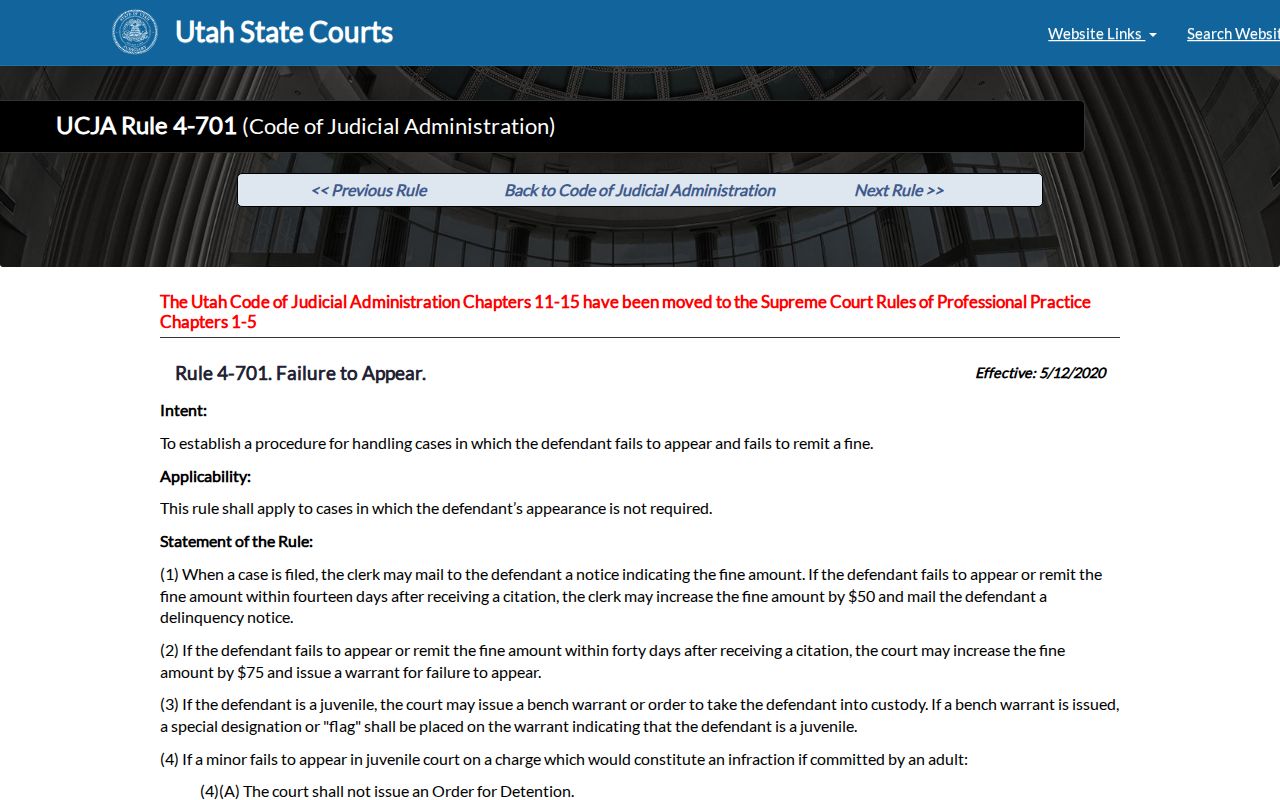
Use the rule as context, then confirm the current docket with the court.
Bench Warrant Issuance in Cache County
The court reviews the missed appearance or other noncompliance and can issue an order requiring the person to come before it. The court’s record identifies the case and the conditions the judge set. Court data may then feed the Utah Statewide Warrants file.
BCI says courts control entry and removal. If a judge recalls a warrant, the public system may not change at the same instant. Preserve a copy of the order or clerk confirmation and ask when the state record should update.
Cache County Courts After Transfers
Older citations can point to a court that no longer operates. Smithfield’s justice court closed in 2021. North Logan/Hyde Park’s court dissolved in April 2025, with cases shifting to district court beginning July 2025. Richmond’s court was approved for dissolution in 2024.
A closure does not prove that a case or warrant disappeared. Keep the old court name and case number, check the current Utah Courts directory, and ask First District Court where the file now sits. A retained city payment link may be stale.
Utah Courts’ official directory helps identify the current court route.
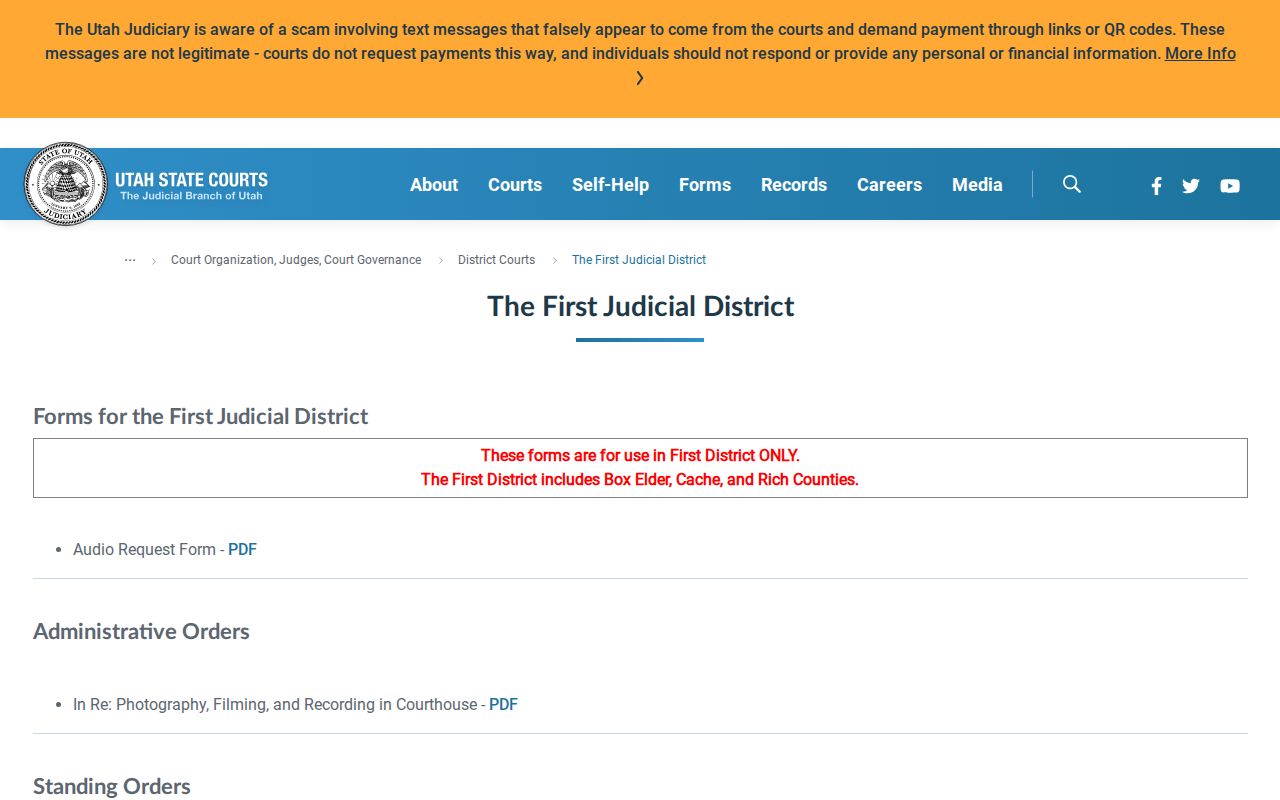
Check the current court rather than inferring a transfer outcome from an old city page.
How Bench and Arrest Warrants Differ
A bench warrant often responds to a missed date or order in an existing case. An arrest warrant follows a probable-cause review and findings under Utah law. Both come from a court, and the court named in the record controls the next case step.
| Feature | Bench Warrant | Arrest Warrant |
|---|---|---|
| Trigger | Missed appearance or court order | Probable cause and statutory findings |
| Who issues it | Judge handling the existing case | Judge or magistrate after review |
| Case link | Often an open citation or court matter | May be tied to a new charge or missed summons |
| Next step | Ask court about date, recall, or compliance | Ask court about appearance, release, or counsel |
Cache County Civil Unit Serves Process
Cache County Sheriff’s Civil Unit lists criminal process, including bench warrants, among the papers it serves. Call Civil at (435) 755-1279 with a service question. That office does not decide whether the issuing judge will recall a warrant or reset a case.
Ask the court about status and the sheriff about service or booking. Do not treat a service inquiry as a substitute for the court’s record.
The Civil Unit’s official page describes the service role.
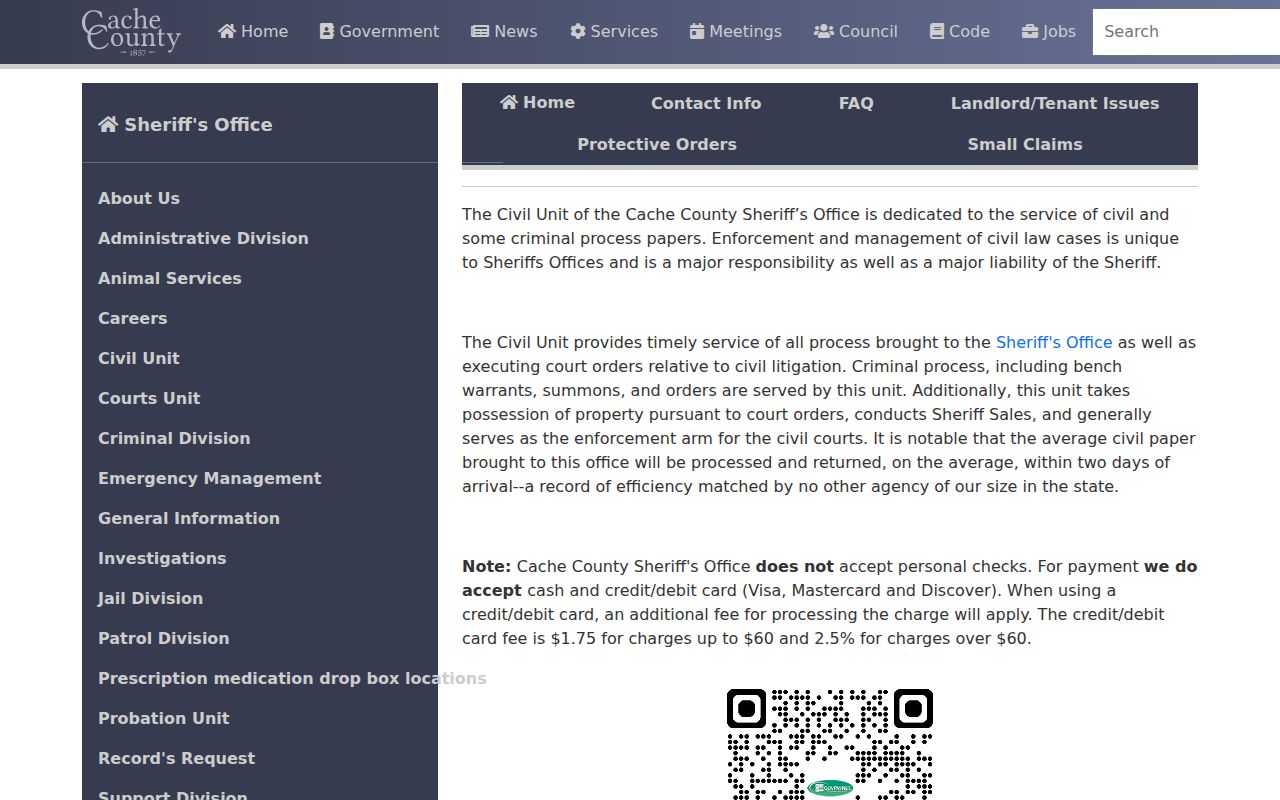
The court controls the warrant; the Civil Unit serves court process.
Clearing a Bench Warrant in Cache County
Call the issuing court before paying, surrendering, or going to a counter. Ask whether the judge requires a new appearance, a motion, payment, bond, or a scheduled surrender. Cache County has no published countywide walk-in surrender calendar or warrant bond table in the sources reviewed.
- Use the statewide search or your notice to identify the issuing court and case number.
- Call the clerk and ask what ID, motion, appearance, or payment the judge requires.
- Consider an attorney if arrest, release terms, or a recall motion is involved.
- Follow the court’s order, then keep the receipt, new date, or recall confirmation.
Caution: A payment receipt or blank search screen does not prove recall; get current confirmation from the court that issued the bench warrant.
Cache County SFTA Is Separate
Utah Driver License Division uses SFTA for suspended failure to appear or comply. That status is an administrative license issue, not the court’s warrant record. The DLD reinstatement page says court fees and a docket showing the failure to appear was cleared may be needed, along with a $40 fee per citation.
Clear the court matter first, obtain proof, then follow DLD’s instructions. DLD does not recall the warrant, and court payment does not promise same-day license restoration.
Utah DLD’s reinstatement steps explain the separate license process.
Cache County Courts That Issue Bench Warrants
First District Court handles district matters. Logan, Hyrum, Providence, and Wellsville justice courts handle their own eligible cases. Hyrum serves Hyrum, Nibley, Mendon, and Paradise; Providence’s court identifies Millville and River Heights in its service area. The case location alone may not tell you which clerk holds it.
Check the notice, the BCI result, or the official court directory. When the court is uncertain, give the First District clerk the old citation or case number and ask where the current docket resides. The issuing court, not the sheriff, decides recall or a new date.