
Providence Warrant Checks
Providence’s Justice Court is the local contact for a citation or court order assigned there. Its city site gives a shared-service court route and publishes session information. Use Utah’s statewide warrant search as another public lookup, then call the court named on a result to confirm whether the docket has changed. The Providence city contact is useful for routing; it is not itself a warrant portal.
- Use the court name printed on the notice; Providence Justice Court also serves Millville and River Heights.
- Search Utah’s official statewide system with the correct name and available identifying details.
- Save the displayed court and docket number, then contact Providence Justice Court through the city’s current directory.
- Ask whether the entry is current and whether the judge requires an appearance, payment, or other filing.
- If the notice names another court or an older agency arrangement, follow that court’s current instructions.
Providence Court Also Handles Millville and River Heights
Providence Justice Court’s published service area includes Millville and River Heights. A resident of either city may therefore see Providence named on a citation. That shared assignment is the key jurisdiction clue: search using the court printed on the filing, not just the municipality where the event occurred.
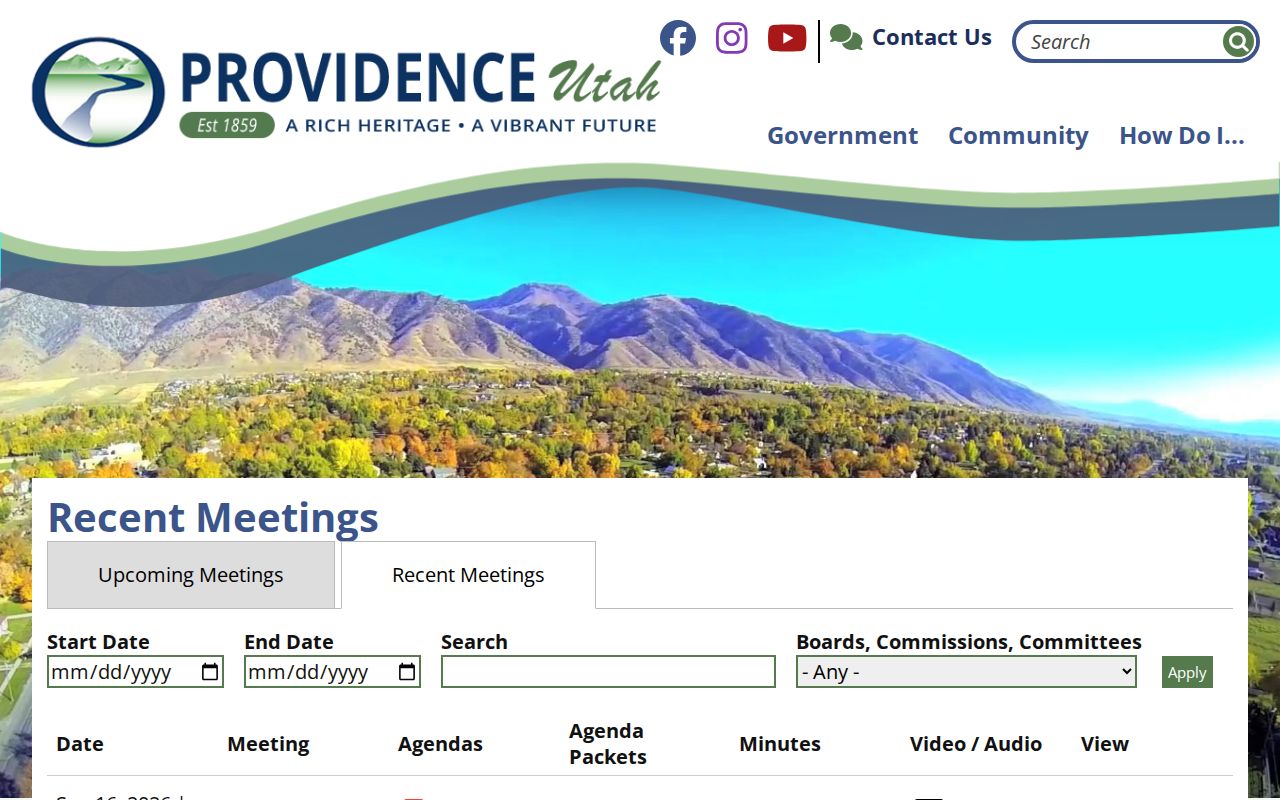
Use the meeting list to find public sessions and the clerk to verify a case order.
Policing and Courts in Providence
Providence city materials list the city contact at 164 N Gateway Drive, Providence, UT 84332, phone (435) 752-9441, with weekday hours of 8 a.m. to 5 p.m. The city site links police information, but its published contact is not a separate warrant-status number. A court question belongs with the clerk; a police incident question belongs with the agency.
Providence Justice Court continues to publish session material. Utah Courts also identifies a Providence judicial assignment beginning in 2025. These current civic details establish that the institution is operating; they do not disclose or determine the status of any individual case.
A Session Calendar Is Not a Case Search
The Providence meetings page shows public court-session activity and helps confirm that the court is operating. It does not show whether a warrant exists in a named case. A person who sees a matching calendar entry should still ask the clerk about the individual docket; someone who sees no calendar event should not assume the case is closed.
Warrants in Providence: The Main Types
Providence court cases can involve citations, infractions, or misdemeanor matters, while other cases may be assigned elsewhere. A missed court event can lead to a judicial response, but only the docket establishes what happened. A Providence address or police contact alone does not prove that a Providence warrant exists.
| Warrant Type | How It Arises | Who Issues It |
|---|---|---|
| Traffic citation | Unresolved citation or missed required appearance | Court named on the case |
| Failure to appear | Missed setting on an active court docket | Judge holding the case |
| Arrest warrant | Judicial order in a criminal case | Issuing court or magistrate |
| Shared-service case | Filing connected with Millville or River Heights | Providence Justice Court when assigned there |
Providence Court Remains an Active Institution
The city published a Justice Court vacancy notice in 2024 and continues to post court-session materials in 2025 and 2026. Utah Courts lists a Providence judicial assignment beginning in 2025. Those facts establish ongoing court operations, but they should not be stretched into a claim about the status or volume of any individual warrant.
Providence Warrant Records: What They Show
A case summary may display its court, number, charge, and hearing history, while the Providence session list only describes scheduled court activity. Check the docket identifier before drawing conclusions. If an online result appears incomplete, ask the clerk whether a later order changed the record.
| Warrant / Case Number | The number connects the court summary with the notice or citation. |
|---|---|
| Subject Name | Use additional case information to distinguish people with similar names. |
| Charge / Offense | The filed allegation or citation connected to the docket. |
| Issuing Court | Providence Justice Court or the other court shown on the record. |
| Bond / Fine Amount | Confirm the current amount and conditions with the clerk. |
| Status | A screen may not reflect the newest order; ask for direct confirmation. |
Older Police-Service References Need a Date Check
Historic Providence material describes law-enforcement service involving Cache County Sheriff. The current city site is the better place to confirm which agency handles a present-day police matter. A past service agreement does not establish who controls a court docket, and a sheriff contact cannot substitute for the Providence court clerk’s status confirmation.
Providence Warrants and Cache County
For countywide verification, Cache County Sheriff lists (435) 755-1000; Utah’s public statewide search covers eligible records beyond Providence. The court named on the docket remains responsible for its order. County information is on the Cache County records home and the warrant-check page.
Warrant flow: Providence Justice Court for the case › Cache County Sheriff for county verification or service › Utah statewide search for broader eligible records.
A Providence address does not make every case a city-court matter; keep the court name with the citation.
No Providence Warrant List Was Located
The city’s current court materials identify contacts and public sessions, but the research did not locate an official Providence active-warrant roster, most-wanted list, or current amnesty event. A calendar entry is not a warrant record. For a personal case question, search the state system and confirm with the court.
Accessing Providence Warrant Records
Utah court rules permit public access to eligible court records while protecting sealed, juvenile, expunged, and other restricted information. Session pages and case files have different purposes. A public entry should not be republished as a private-person list.
Key Rules:
GRAMA, Utah Code §63G-2-301 - governs access to qualifying government records with exceptions.
Utah Rule 4-202 - identifies public and nonpublic court-record categories.
Utah Code §78A-6-209 - protects juvenile-court information under state law.
Providence’s Population Is a Dated Census Figure
The 2020 Census counted 8,218 Providence residents, fifth among the five cities selected for these profiles. That figure explains the editorial order only. It does not measure court caseload, warrant counts, or current population, and it should not be used to infer anything about a specific resident.