
Cache County Probable Cause Review
Utah Code §77-7-5 sets the bar before a warrant can issue instead of a summons. The court must find probable cause plus a need, such as preventing harm, securing an appearance, or protecting public safety. Rule 6 supplies the court process and the contents of the warrant itself. A warrant is a court order. The court named on it decides the conditions. In Cache County, felony and class A misdemeanor matters generally run through First District Court, while a justice court may take a misdemeanor or traffic matter within its own jurisdiction. The right route follows the case, not the person's home city. For the statutory language on these issuance findings, Utah Code §77-7-5 is the source to read.
How Arrest Warrants Work in Cache County
An arrest warrant empowers a peace officer to take someone into custody on the court's order. Utah law requires a judge to weigh probable cause and whether a warrant is truly needed. Not every case starts that way. The rules generally prefer a summons when one will work. But a missed summons or a skipped court date can change the route fast, so check the actual docket. The court and case details on a record point you to the one office, the issuing court, that can confirm current warrant status in Cache County.
Cache County Summons or Warrant
Under Utah Rule of Criminal Procedure 6, a court normally issues a summons once a charge is filed. A warrant is reserved for cases where an address is unknown, an appearance seems unlikely, risk is present, or someone ignored a summons. That call belongs to a judge or magistrate, not the prosecutor or police. Your notice or docket usually shows whether you face an initial arrest warrant or a bench warrant tied to a missed court obligation. The label matters. If it is unclear, the Cache County court clerk can explain the order and whether an appearance is required. Utah Rule 6 lays out the full summons and warrant framework the Cache courts work under.
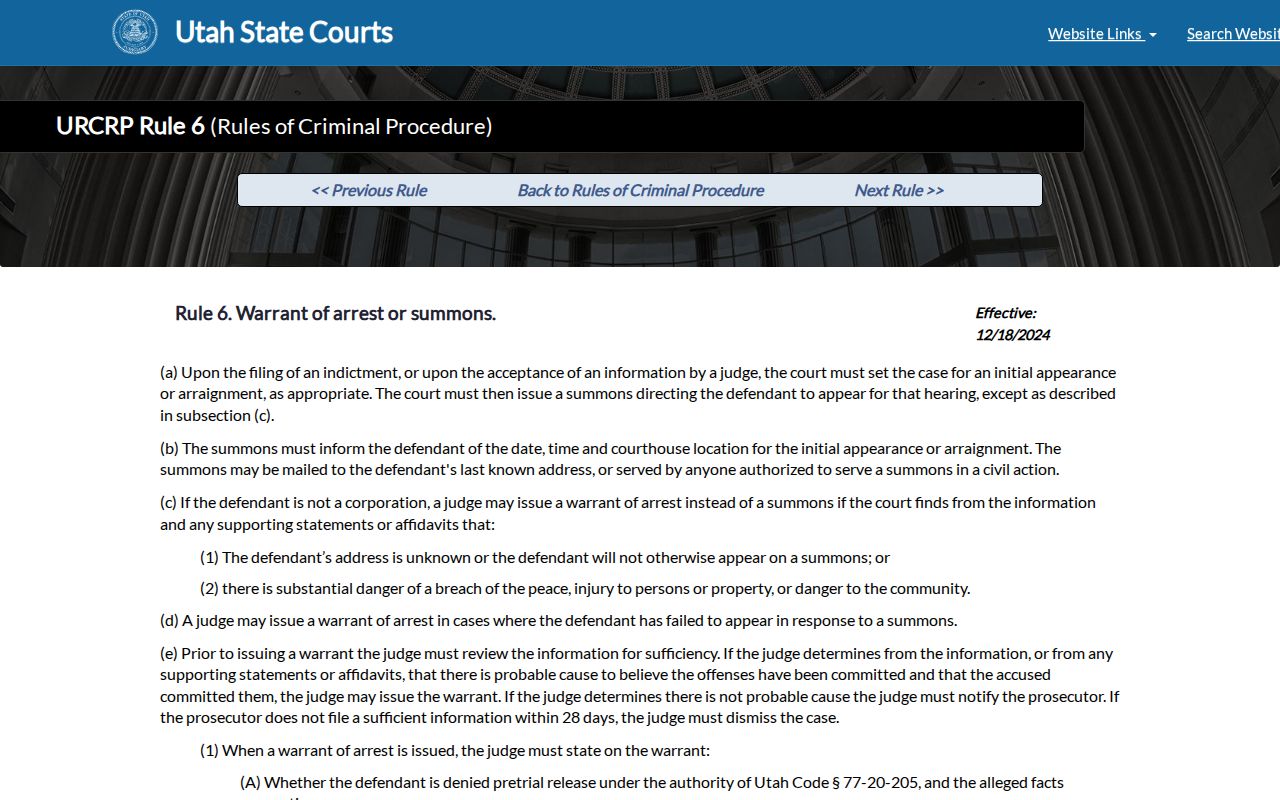
The rule gives the court pathway; the clerk supplies case-specific instructions.
Arrest Warrants: What They Contain
Utah Rule 6 spells out what goes in a warrant: the person to be arrested, the offense or basis, the issuing authority, and any release conditions. A public warrant search may show only part of that. Fields the portal leaves out stay unknown. The issuing Cache County court holds the full record.
| Warrant number | Court-assigned identifier; no single Cache format was published. |
|---|---|
| Named person | Use name and date of birth only to distinguish a possible match; keep identifiers private. |
| Charge or basis | The court record may identify the charge or reason for the order. |
| Issuing authority | The judge or magistrate and court tied to the case. |
| Bond and release | Case-specific; no Cache County warrant bond schedule was located. |
| Date issued | Ask the issuing court whether the record remains active or has changed. |
Cache County Arrest and Release Timing
Utah Rule 9A governs magistrate review after an arrest when release conditions are not met. It builds in a 48-hour magistrate review plus a later review by the issuing court, which sets the release conditions. Those timing rules won't tell you what bond applies to a specific Cache County case. Call the court or the jail for current booking and release instructions. Cache County Jail links GovPayNet for bail payments, but the vendor cannot change a court order on its own. For the timing and release framework itself, Utah Rule 9A is the rule to read.
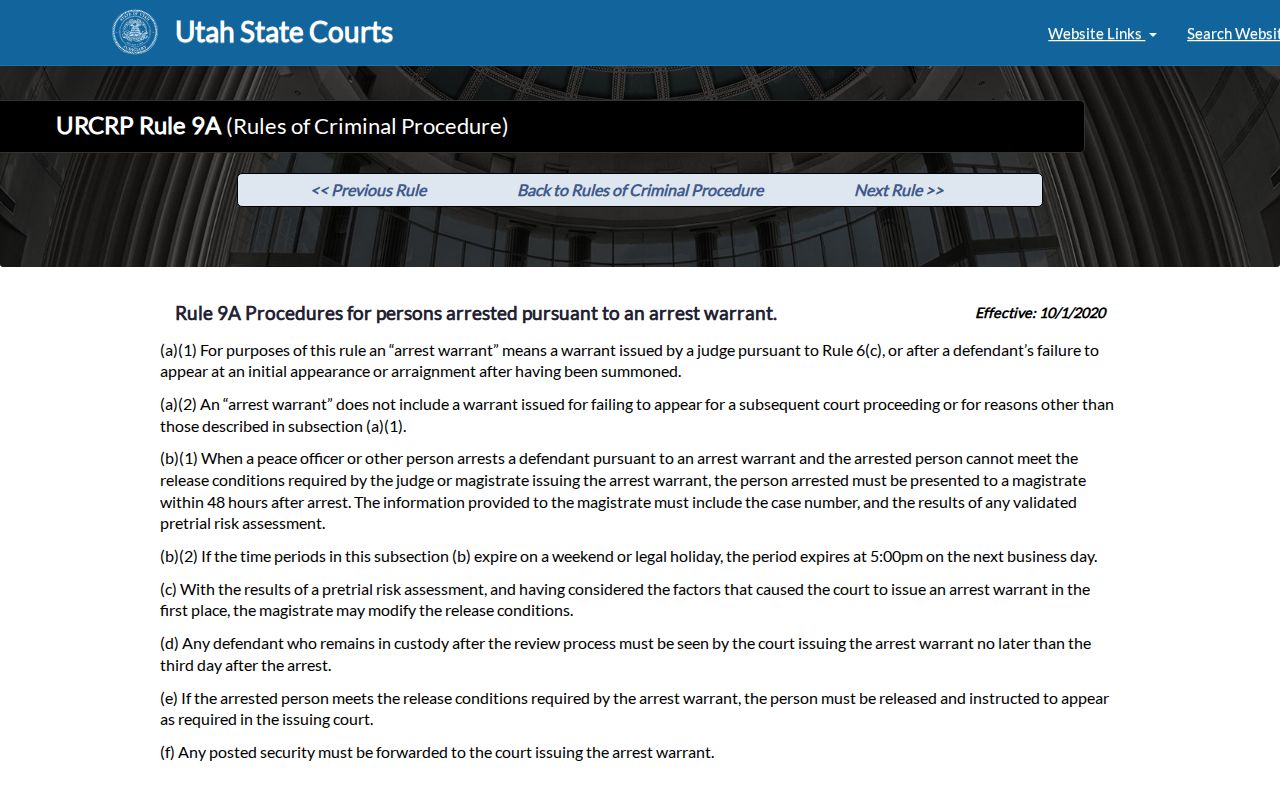
Treat the rule as a timing reference, then verify any live Cache County case with its own court.
How Warrants Get Served in Cache County
Utah Rule 6 lets peace officers execute a warrant anywhere in the state. In Cache County, the Sheriff's Civil Unit serves criminal process, including bench warrants. The Sheriff's Criminal Division fields STAR deputies assigned across communities served under county contracts, and which agency handles a matter can depend on where it arose. Service is enforcement work, nothing more. Serving a warrant does not give that agency power to recall it. For county warrant verification, call the Sheriff's Office at (435) 755-1000; for service questions, call Civil at (435) 755-1279; for status and conditions, contact the issuing clerk. First District Court information identifies the right Cache court route.
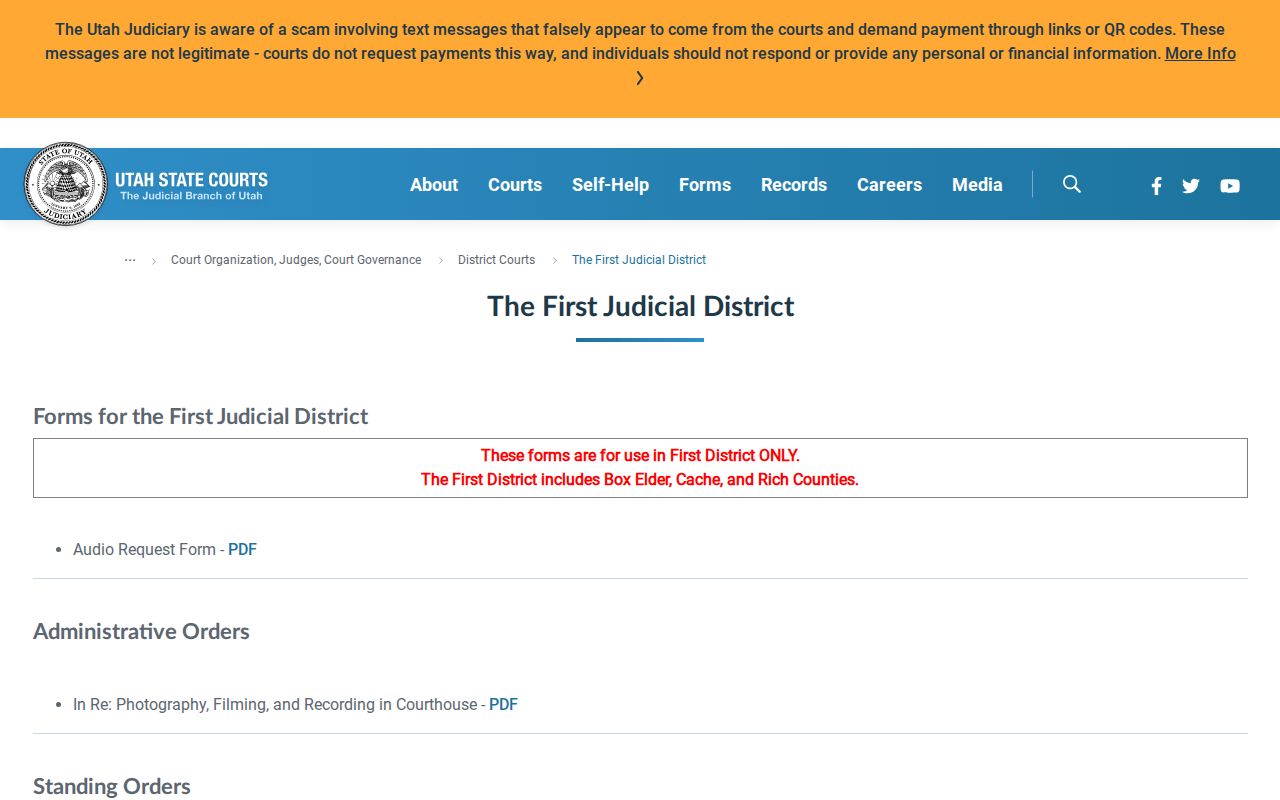
First District covers Cache, Box Elder, and Rich counties, while lower-court matters stay with their own court.
Cache County and Federal Warrants
A federal notice travels a different road than Utah's Statewide Warrant Search or Cache County Sheriff verification. Cache County sits in the Northern Division of the U.S. District Court for Utah. PACER opens federal dockets, and the U.S. Marshals Service handles federal service and fugitive work. No Cache-specific federal warrant roster exists for the public. A docket search, even a CourtListener result, cannot certify that no federal warrant is out there. When the notice is federal, contact the federal court, the Marshals, or counsel directly. The U.S. Marshals District of Utah page gives the official agency route.
Arrest Warrants, Summonses, and Bench Warrants
These three terms describe different court actions. A summons directs an appearance. An arrest warrant authorizes custody, while a bench warrant usually follows a missed setting or order in an existing case. The issuing Cache County court can tell you which one applies and whether release terms are set.
| Feature | Arrest Warrant | Summons | Bench Warrant |
|---|---|---|---|
| What it orders | Arrest under a court order | Appearance on a stated date | Often arrest after a missed obligation |
| Basis | Probable cause and required findings | Notice of a case or charge | Failure to appear or comply |
| Who issues it | Judge or magistrate | Court | Judge handling the case |
| How to respond | Confirm release and appearance terms | Follow the notice | Ask court about recall or a new date |
Cache County Has No Public Arrest Roster
Cache County posts no public arrest-warrant roster or dashboard. So skip the hunt for one. Start with the state warrant search, then let the sheriff verify what it shows. The court that owns the case answers status questions. That keeps each matter with the office that can actually act on it. If a warrant might carry your name, call official numbers and talk with a lawyer or clerk about the safe, lawful next step. Never confront an officer or a stranger over a search result.
Handling an Arrest Warrant in Your Name
First nail down the court, the case number, and the current status. Ask whether you must appear in person. Ask whether bond is set, whether another agency holds a hold, and what identification to bring. Cache County publishes no walk-in surrender hours, so set the details with the court and sheriff before you drive anywhere. A lawyer can walk you through a recall motion, an appearance, a surrender, or bond; the Cache County warrant overview lays out the confirmation sequence. Once the court orders something or payment clears, keep your proof and ask when the state record updates.
Important: Confirm current release and appearance instructions with the issuing court before surrendering or paying; no online result can replace that direction.